

Running a mid-size business is a delicate balancing act. Growth brings excitement, but it also comes with new challenges and vulnerabilities. Whether it's an economic downturn, a supply chain disruption, or an unexpected market shift, crises can hit unexpectedly and hard. The good news is that you don’t just have to survive through tough times—you can thrive. Here’s how to crisis-proof your mid-size business with financial strategies that truly work.
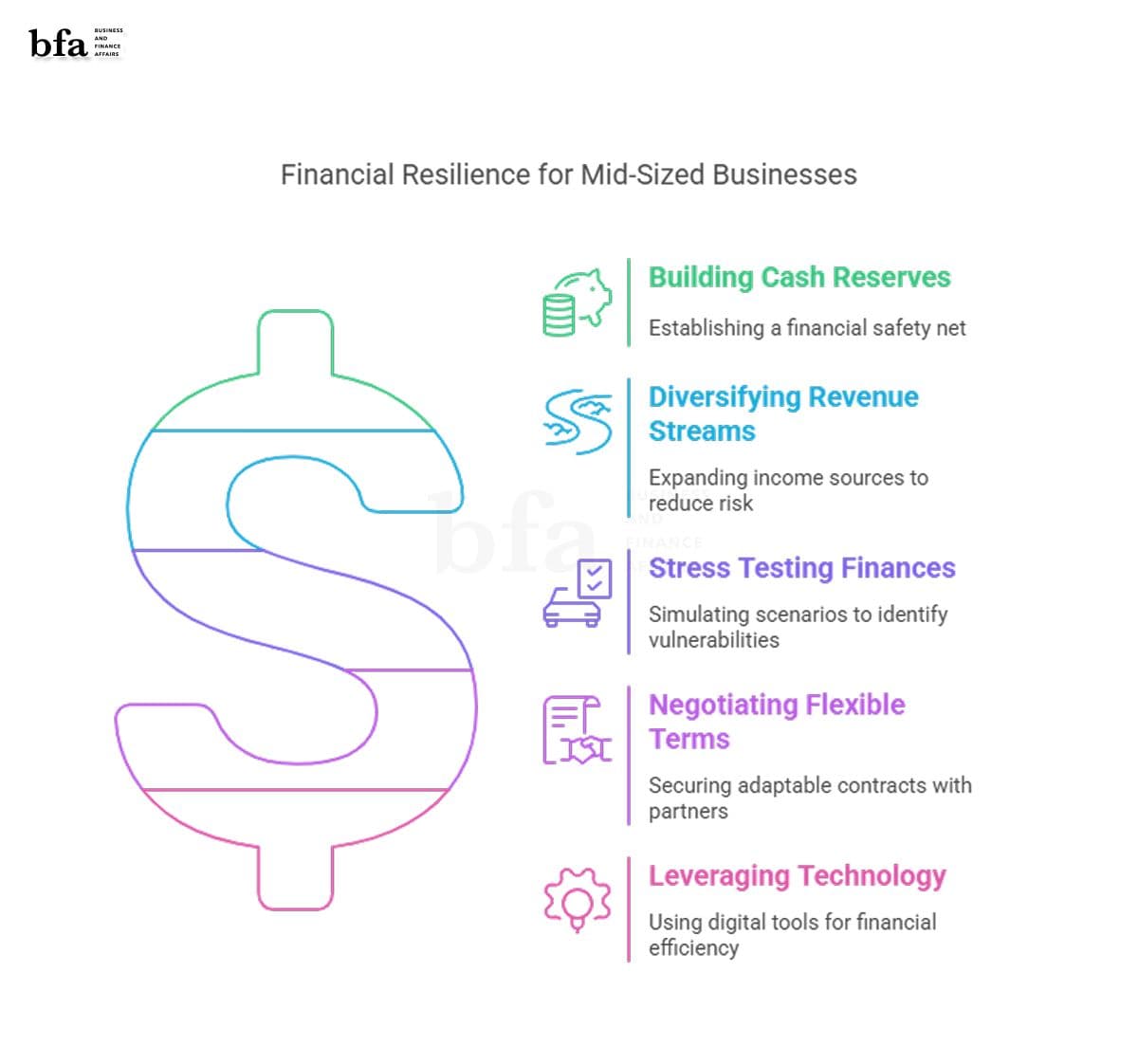
1. Build a Cash Cushion (Before You Need It)
Cash flow is the lifeblood of any business, but it's especially critical for mid-size firms. Too often, businesses get caught off guard because they’re stretched thin while chasing growth. A solid cash reserve—think 3 to 6 months of operating expenses—can be your safety net when revenue dips.
How to Start: Review your monthly burn rate and set a savings target. Trim non-essential costs (that unused software subscription, for example) and redirect those savings into an emergency fund.
Pro Tip: A Virtual CFO can analyze your cash flow patterns and pinpoint exactly how much you need and how to reach that goal without hindering your growth.
2. Diversify Your Revenue Streams
Relying on a single client or product is a risky proposition, especially when a crisis strikes. Mid-size businesses often have the resources to explore new avenues, so make use of them. Diversification doesn’t require reinventing the wheel—it could be as simple as offering a complementary service or tapping into a new market.
This is not about reinventing the business. It is usually one adjacent thing: a complementary service, a channel you already have the product for, a customer segment buying next door. A manufacturer with a B2B line and idle capacity can often reach end customers directly without new tooling — the constraint is rarely the factory, it is whether anyone has modelled what the second channel does to working capital.
How to Do It: Assess your current offerings and customer base. What’s one small add-on or untapped audience you could target? A financial advisor can help analyze the numbers to ensure it’s a sound investment.
3. Stress-Test Your Finances
You wouldn’t drive a car without checking the brakes—so why run your business without testing its resilience? Stress testing means simulating worst-case scenarios (e.g., a 30% sales drop) to see where your finances crack under pressure.
Why It Matters: Stress testing reveals weak spots, such as overreliance on a single supplier or inflated overhead, before they turn into emergencies.
Action Step: Map out your fixed versus variable costs and model a few “what-if” scenarios. Not sure where to start? A Virtual CFO can run these simulations and create a tailored contingency plan for your business.
4. Negotiate Flexible Terms Now
Crises often expose the rigidity in long-term contracts—think leases or supplier deals that lock you in. Mid-size businesses typically have more negotiating power than startups, so use it to your advantage. Flexible terms give you breathing room when cash gets tight.
How to Approach It: Reach out to vendors or landlords and request scalable payment options or shorter contract commitments. Frame it as a mutually beneficial strategy for long-term partnerships.
Bonus: A seasoned financial strategist can handle these negotiations for you, ensuring you don’t leave any money on the table.
5. Cut the manual work out of your reporting
Tracking expenses in a spreadsheet is survivable right up to the month you need last week’s numbers today. Cloud accounting plus automated forecasting takes the delay out of month-end. For an Indian entity that realistically means Tally or Zoho Books — Intuit withdrew QuickBooks from India in April 2023, and Xero carries no Indian payroll or GST module.
Quick Win: Integrate a tool that syncs with your bank accounts and provides real-time financial insights. Pair it with expert oversight, and you’ll have a crisis-ready system in place.
Our Take: We’ve seen SMBs cut reporting time by 50% with the right tech stack, giving them more time to focus on strategy instead of scrambling.


