

Here's a brutal reality check: 82% of businesses don't die because they're unprofitable but they die because they run out of cash.
I've witnessed this tragedy play out more times than I care to count. An entrepreneur walks into my office, practically glowing as they show me their P&L with those beautiful profit margins. Fast forward three months, and they're calling me in a panic because they can't make payroll. They had all the profits in the world on paper, but zero rupees in the bank when it mattered.
If you're running a growing business, let me be crystal clear: cash flow isn't just important but it's literally the difference between success and bankruptcy. You could have the most innovative product, the smartest team, and customers who love you, but if the cash stops flowing, game over.
I'm about to walk you through the five deadliest cash flow mistakes I see entrepreneurs make every single day. Fair warning: you're probably making at least two of them right now.
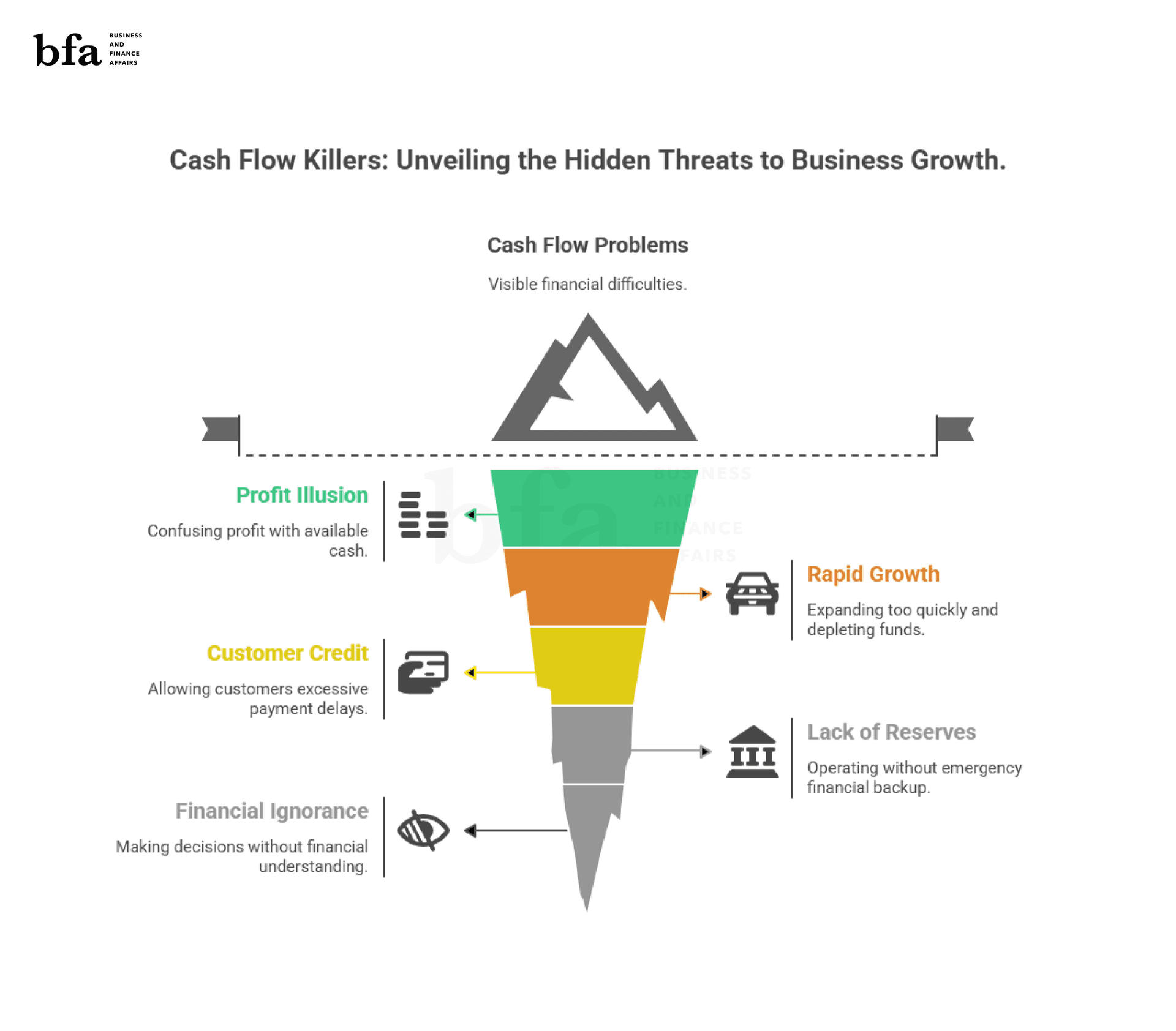
5 Cash Flow Killers That Will Destroy Your Growing Business
Mistake #1: Thinking Profit Means You Actually Have Money
This one kills me every time. Even smart, experienced business owners fall into this trap.
Here's the truth bomb: Profit lives in your accounting software. Cash flow lives in reality.
Let me paint you a picture. Your monthly P&L shows ₹5,00,000 in profit, and you're feeling pretty good about yourself. But that "profit" is tied up in invoices your customers haven't paid yet, or it's sitting in inventory gathering dust in your warehouse. Try paying your office rent with unpaid invoices and see how that goes.
This is how a profitable business runs out of money. Sales go out on thirty-day credit terms and the accounting system books them the day the invoice is raised. Suppliers, though, want cash before the raw material ships. On paper the month was good. In the bank account there is nothing to pay for the next one, and the gap is invisible in a profit and loss statement.
Here's what's really happening: You sell ₹10,00,000 worth of products on 30-day payment terms. Your accounting software celebrates this as an instant sale, but your bank account? Still waiting. Meanwhile, your team needs their paychecks, your landlord expects rent, and your suppliers want real money in hand and not just figures on a spreadsheet.
The fix: Stop living in accounting fantasy land. Check your actual cash position weekly, not when you remember to. Use accounting software that shows both profit AND cash flow, and never make spending decisions based on profit alone. If the cash isn't in your bank account, it doesn't exist yet.
Mistake #2: Growing So Fast You Burn Through Cash
Growth is intoxicating. It feels amazing, looks impressive to everyone watching, and can absolutely destroy your business faster than staying small ever could.
Here’s a pattern I see all the time: A business lands its biggest contract yet or experiences a sudden sales spike. Fueled by excitement, the founder dives into rapid scaling—hiring more people, leasing a larger office, expanding inventory, and launching bold marketing campaigns. Then, reality hits.
That dream contract? It pays in 90 days, not 30. That sales spike? Turns out it was just a seasonal blip. Suddenly, they're hemorrhaging cash on all those expansion costs while waiting for revenue that may never come.
I remember one client who hired five new people after one good month. Those salaries started immediately, but the revenue to support them took six months to materialize. They nearly went bankrupt chasing growth they couldn't afford.
The math is unforgiving: Every new employee costs you money from day one, but they might not generate revenue for months. Every expansion requires upfront cash that you may not see back for a long time.
Smart growth strategy: Expand in careful stages, not dramatic leaps. Before you make any big moves, map out exactly when you'll need cash versus when it will actually arrive in your account. Don't just look at sales projections but track actual cash receipts. And always, always have a backup plan for when growth takes longer than expected.
Mistake #3: Letting Your Customers Become Your Bank
Your customers are not your personal lending institution, but if you're terrible at managing receivables, that's exactly what they become.
Late payments are cancer for cash flow. Every single day an invoice sits unpaid is another day you can't invest in growth, pay your team confidently, or sleep without worry. Yet I see business owners treating collections like it's beneath them or something they'll "get to later."
The tragedy? Most payment delays? Totally preventable. When you set clear expectations from the start and follow up consistently, you can avoid 90% of late payment headaches before they ever happen.
Here’s your action plan: Set crystal-clear payment terms from day one and make sure your clients actually understand them. Then, send invoices immediately after the work is done, not “whenever you get to it.” Your cash flow depends on it. Follow up on overdue accounts within 24 hours and not next week when it's convenient.
Consider offering small early-payment discounts. Yes, it cuts into margins slightly, but it's infinitely cheaper than the cost of late payments. And if you're doing serious volume, invest in automated invoicing systems. They'll pay for themselves in the first month.
Mistake #4: Operating Without a Financial Safety Net
Running a business without cash reserves is like driving without a spare tire — everything feels fine until you hit a bump. And when that happens, you’re stuck on the side of the road with no way to move forward.
I see growing businesses make this mistake constantly. Every rupee gets poured back into expansion and more staff, better marketing, new equipment—without setting aside anything for emergencies. It feels like smart growth strategy, but it's actually smart suicide strategy.
One bad month, one major customer who pays late, one unexpected expense, and you're staring at bankruptcy. The statistics are terrifying: 17% of business owners would have to close their doors after just two months of declining revenue. That's not running a business, that's playing financial Russian roulette.
The reality check: Having cash reserves isn't "dead money sitting around" but it's the difference between a sustainable business and a house of cards waiting to collapse. Start building reserves equal to 3-6 months of operating expenses.
I get it that it physically hurts to see that cash just sitting there instead of fueling your next big growth move. But trust me, that safety net is what lets you sleep at night. It’s what keeps your business running when others are scrambling to survive.
Mistake #5: Running Your Business Blindfolded
You wouldn't drive across the country without GPS, so why are you running a business without a financial roadmap?
Yet that's exactly what happens. No clear budget, no revenue targets, no clue when the money runs out. Decisions get made based on gut feelings and whatever happens to be in the bank account that day. A shocking 54% of small businesses operate without any documented budget at all.
Planning isn't about creating fancy spreadsheets that look impressive. It's about seeing problems coming before they flatten you. It's knowing you'll need ₹7,50,000 in March for spring inventory, not discovering it in February when it's too late to secure reasonable financing.
Here’s what changes everything: Build a simple 12-month cash flow forecast and stick to it. Update it every month like clockwork. Know exactly when money is coming in and when it’s going out. Plan ahead for the ups and downs: seasonal slowdowns, tax deadlines, big purchases, and growth investments.
Your forecast doesn’t have to be perfect but it just needs to exist. It’s not about predicting the future, it’s about giving yourself the clarity to make smart decisions today… instead of panicked ones tomorrow.
The Bottom Line
Cash flow management isn’t sexy. It won’t land you a magazine cover or win startup awards.But it is the difference between being a success story and being a cautionary tale. You don’t need to obsess over spreadsheets. You just need visibility, discipline, and a plan. That’s what keeps your business alive and thriving. But you know what it will do? Keep you in business when everyone else is closing their doors.
I've seen brilliant entrepreneurs with amazing products fail miserably because they treated cash flow like an afterthought. Don't be one of them.
These five mistakes aren't theoretical problems but they're real business killers that destroy real companies every single day. The good news? They're completely fixable if you act now instead of later.
Pick one area from this list. Just one. Fix it this week. Then tackle another one next month. Small, consistent actions compound into big results over time. Your future self will thank you, especially when you're still thriving while others are explaining to their families why the business didn’t make it.
You didn’t start your business just to survive paycheck to paycheck. You started it to build something meaningful. Something that lasts.
But here’s the truth: dreams don’t pay the bills — cash does. And managing your cash flow is what transforms ambition into a real, sustainable business.


